

Shopify vs WordPress for UAE Businesses: Which Platform Should You Choose?
This is usually one of the first questions we get asked in a discovery call, and it’s rarely a simple one. Shopify and WordPress are both capable of producing a beautiful, fast, high-converting website. The right choice has less to do with which platform is “better” and more to do with what your business actually needs it to do.
We build both, so we don’t have a horse in this race. Here’s how we’d genuinely walk a UAE business owner through the decision.
The short answer
If you’re selling physical products online and need a store that handles inventory, checkout, shipping rules and payment gateways out of the box, Shopify is almost always the better starting point. If you’re a service business, a corporate site, a personal brand, or you need total flexibility over content and structure that goes beyond a product catalogue, WordPress usually serves you better.
That’s the short version. The longer version depends on a handful of specifics worth thinking through properly before you commit, since migrating between platforms later, while possible, is extra time and cost you can avoid by getting the choice right the first time.
1. What are you actually selling?
Shopify was purpose-built for e-commerce, so anything transactional, physical products, subscriptions, even some service bookings, tends to be faster and cheaper to launch on Shopify than to bolt onto WordPress with plugins. Payment gateways, shipping rules, tax configuration and inventory management come as native functionality rather than a stack of third-party add-ons that all need to talk to each other correctly.
If your business isn’t selling products directly through the site, a hotel, a clinic, a consultancy, a real estate agency, WordPress generally gives you more natural flexibility for the kind of content-led pages those businesses need: service pages, long-form pages, case studies, careers, and blogs that aren’t structured around a product catalogue.
2. How much content flexibility do you need?
WordPress was built as a content management system first, and it shows. If your site needs frequent new page types, evolving service offerings, a busy blog, or content structures that don’t map neatly onto “products” and “collections,” WordPress gives a lot more room to grow without fighting the platform’s underlying structure.
Shopify can absolutely run a blog and additional pages, and we build SEO-solid Shopify stores as standard, but its content tools are secondary to its commerce tools. If your business genuinely is a store first, this rarely matters. If content and storytelling are central to how you sell, it’s worth weighing.
3. Speed and performance out of the box
Shopify is a hosted platform, which means the infrastructure, security patches and core performance are managed for you. That takes a maintenance burden off your plate but also means less low-level control over hosting decisions. WordPress is self-hosted, so performance depends heavily on the hosting environment, the theme, and how disciplined the build is about plugins, three factors that are entirely in your (or your developer’s) hands.
In practice, a well-built site on either platform should load in under three seconds, which is the baseline we hold every website we build to. The platform matters less here than the quality of the build, a bloated WordPress site with forty plugins will always be slower than a lean, custom Shopify store, and vice versa.
4. SEO: both can rank, if they’re built properly
This is one of the most common myths we hear: that Shopify is somehow worse for SEO than WordPress. It isn’t, provided the store is set up with clean URL structures, proper metadata and fast load times from the start. Every store and website we build, on either platform, ships with solid on-page SEO foundations, optimised titles, meta descriptions, structured data, and clean architecture, because that groundwork matters more than which platform it’s built on.
Where WordPress does have a natural edge is in long-form, keyword-targeted content at scale, simply because it was designed around publishing. If your UAE growth strategy leans heavily on content marketing and local SEO, our local SEO guide for Dubai businesses is a useful next read regardless of which platform you land on.
5. Ongoing maintenance and who’s responsible for it
Shopify handles security updates and core infrastructure automatically, which suits business owners who want to focus on running the business rather than the website. WordPress gives you more control, but that control comes with responsibility: plugins, themes and the core platform all need regular updates, and skipping them is one of the most common ways a WordPress site gets compromised.
Either way, we’d always recommend a proper maintenance plan rather than leaving a site to fend for itself after launch. It’s the difference between a site that stays fast and secure for years and one that quietly degrades until something breaks.
6. Migrating later isn’t the end of the world, but it’s not free either
If you launch on one platform and outgrow it, moving to the other is entirely possible; we handle full migrations from WooCommerce, Wix, Squarespace and other platforms onto Shopify, preserving product data, customer records and SEO rankings throughout the process. But it’s additional time and budget you can often avoid simply by being honest at the outset about whether your business is fundamentally a store or fundamentally a content and services business.
A quick way to decide
- Selling physical products with checkout, shipping and inventory front and centre → Shopify
- A service business, corporate site, or content-heavy brand → WordPress
- Want infrastructure and security handled for you → Shopify
- Want maximum flexibility over content structure and design → WordPress
- Not sure yet, or somewhere in between → worth a proper discovery conversation before committing
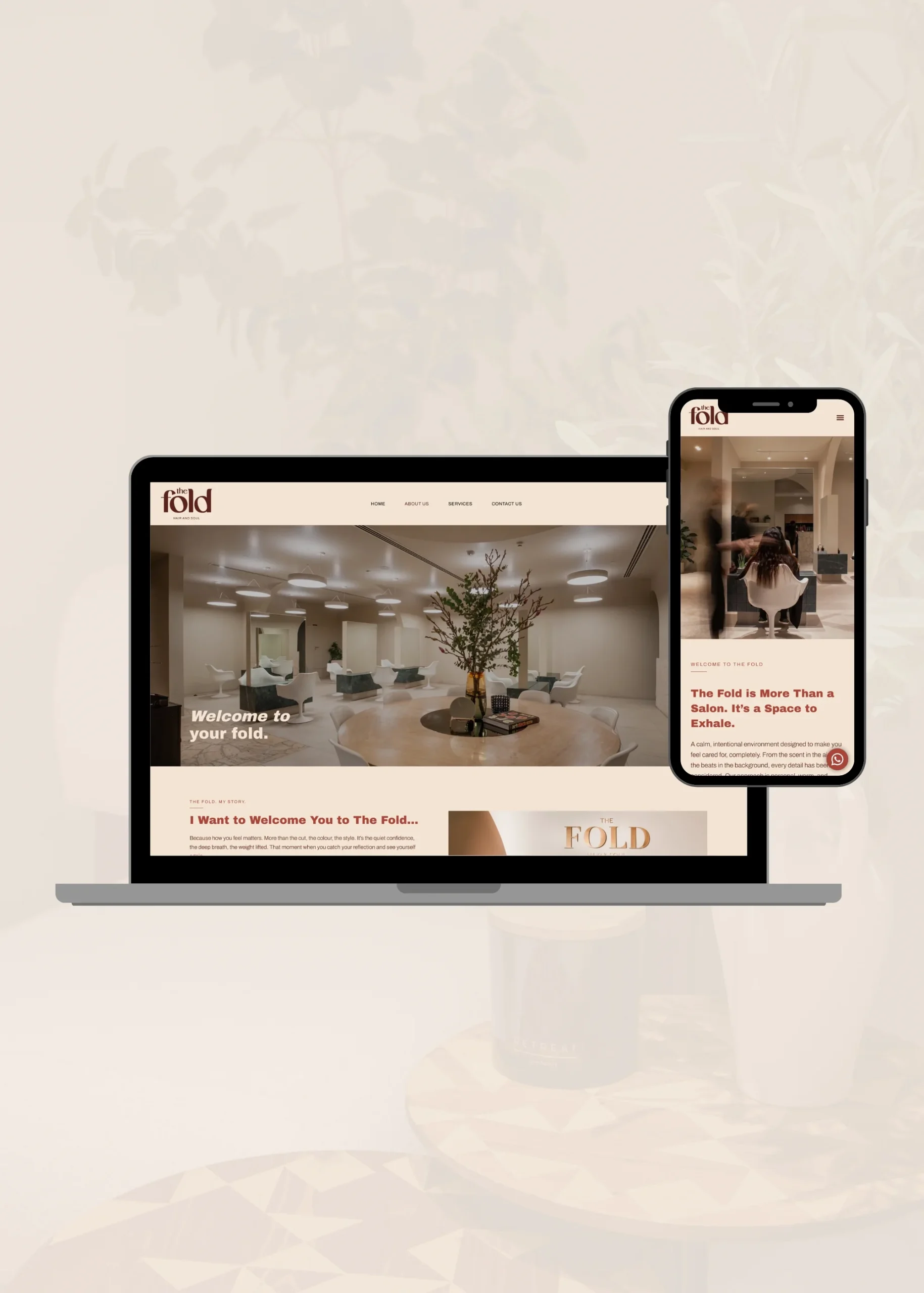
For context, our Lovespun project is a bespoke Shopify build designed around product storytelling and checkout flow, while our Boho Salon project is a content and booking-led WordPress site built for a service business rather than a product catalogue. Neither is the “right” platform in the abstract; they were right for what each business needed. If you run a hair or beauty business specifically, our dedicated page on salon website design covers what that decision looks like for your industry in more depth.
Frequently Asked Questions
Is Shopify or WordPress better for SEO in the UAE?
Neither platform has an inherent SEO advantage; both can rank well when built with clean URL structures, fast load times, proper metadata and structured data from the start. WordPress has a natural edge for high-volume, long-form content publishing, while Shopify is generally faster to get a well-structured product catalogue indexed.
Can I switch from WordPress to Shopify later, or vice versa?
Yes. Migrations between platforms are common and can preserve your product data, customer records and existing SEO rankings when handled carefully. It’s an extra project rather than a simple flip of a switch, so it’s worth choosing the right platform upfront where possible.
Which platform is cheaper to run long-term for a UAE business?
Shopify’s pricing is more predictable since hosting and core security are bundled into the subscription. WordPress can be cheaper or more expensive depending on hosting choices, plugin costs and how much ongoing maintenance the site needs, so it varies more by project than Shopify does.
Is Shopify only for large e-commerce brands?
No. Shopify scales from a small single-product store to a large multi-category retailer, and the platform itself doesn’t put a meaningful ceiling on a growing UAE business. The bigger question is usually whether your business model is fundamentally transactional, not how big it currently is.
Do I need a developer to manage a Shopify or WordPress site myself?
Both platforms are designed to let a non-technical business owner manage day-to-day content and product updates. Structural changes, custom features, and security maintenance on either platform are still best handled by a developer, which is why an ongoing maintenance plan is worth budgeting for regardless of platform.
Still not sure which platform is right for your business? We build bespoke sites on both, with no templates and no shortcuts either way. Get in touch for an honest recommendation based on what you’re actually trying to achieve.